
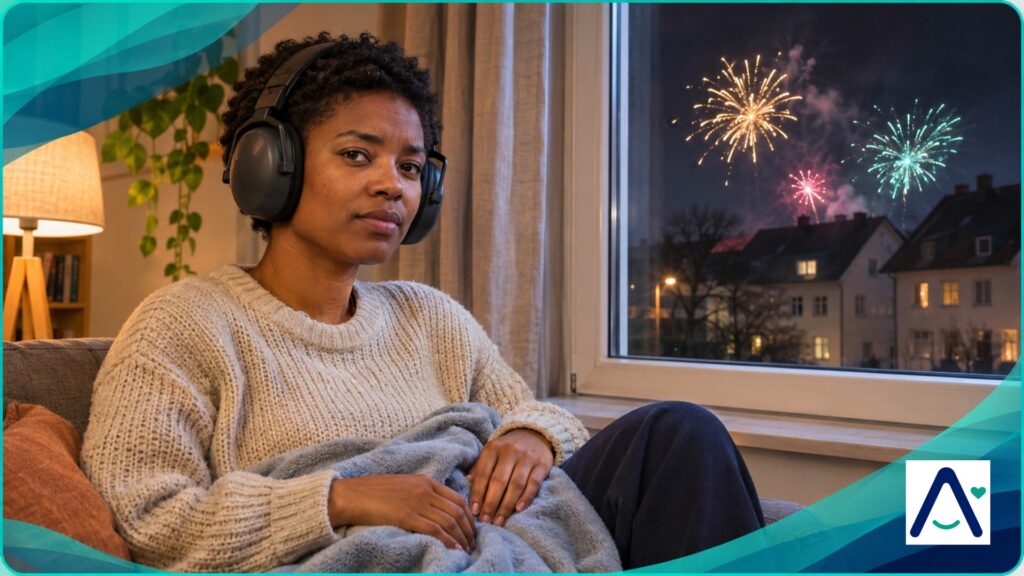
Loud bangers, bright flashes and unpredictable bangs can put a considerable strain on people with autism over the turn of the year. What makes it particularly difficult is that fireworks often start hours before midnight and are occasionally heard days earlier. Anyone who reacts sensitively to sound or light can nevertheless prepare for New Year’s Eve with suitable protective measures and early planning.
Why fireworks can be stressful for people with autism
Some people on the autism spectrum perceive sounds, light or other sensory stimuli particularly intensely. Sudden explosions can therefore trigger stress, fear or sensory overload. Other people with autism enjoy fireworks or find certain light and sound effects pleasant.
One particular difficulty lies in the unpredictability. Even if it is known when the big display starts, individual bangers are hard to anticipate. The British National Autistic Society therefore recommends discussing the plan and possible stresses as early as possible.
There is also a health risk that affects everyone. The German Environment Agency points out that very loud fireworks can cause permanent hearing damage.
Preparing hearing protection and quiet rooms early
Anyone who finds bangs stressful can use earmuff-style hearing protection or suitable earplugs. Headphones with active noise cancelling can also help reduce disturbing sounds. For very loud bangs, however, they are no substitute for tested hearing protection.
It is important to try out the chosen solution before New Year’s Eve. Some people find the pressure of headphones or the feel of earplugs unpleasant in itself.
In addition, a room that is as quiet as possible can be prepared. Closed windows and shutters can weaken sounds and flashes of light. Familiar objects, pleasant lighting and self-chosen activities can make the stay easier.
Anyone who wants to spend the night at home can also put on familiar music or a film. The volume should stay comfortable, rather than drowning out the noise of the fireworks with particularly loud music.
A concrete New Year’s Eve plan can provide security
Predictable routines can help reduce uncertainty. Families can, for example, decide together when to eat, which activities are planned and where someone can withdraw if needed.
For children with autism, simple schedules, pictures or short explanations can help. It should also be discussed that individual bangers can already be heard in the afternoon or evening.
Anyone attending a party should check beforehand whether a quiet room is available and whether the event can be left at any time. Going home early is a possibility just as much as seeing in the new year in familiar surroundings.
Talking to neighbours can also help. Anyone who knows that fireworks are planned right in front of their house can ask for notice beforehand. This does not, however, guarantee a quiet environment.
What can help with acute sensory overload
If the first signs of overwhelm appear, the strain should be reduced as early as possible. This can include going to a quiet room, pausing conversations and avoiding further light or sound stimuli.
Relatives should stay as calm as possible and not add further demands. Physical contact can be calming, but for other people it is a further burden. What matters is the individual wishes of the person affected.
Nobody should be pushed to take part in the fireworks despite visible overload. A child also does not have to stay up until midnight to experience the turn of the year.
Further information is available in our knowledge article Recognising and preventing sensory overload. How relatives can help once an overload reaction has already occurred is explained in the article What helps during a meltdown?.
A successful turn of the year does not have to involve fireworks. What matters is that people with autism can have a say in how they spend New Year’s Eve and what support they need.
Sources and scientific basis
- National Autistic Society. Bonfire Night and Fireworks. Recommendations on preparation, noise protection and places to withdraw during fireworks.
- National Autistic Society. Our top tips for an autism-friendly Bonfire Night. Published on 28 October 2024. Advice on planning and on coping with sensory stress.
- German Environment Agency (Umweltbundesamt). Silvester ohne viel Schall und Rauch ins neue Jahr (New Year’s Eve without much noise and smoke). Updated on 28 October 2025. Information on noise, fireworks and possible hearing damage.
- German Environment Agency (Umweltbundesamt). Feinstaub durch Silvesterfeuerwerk (particulate matter from New Year’s Eve fireworks). Updated on 19 January 2026. Information on the environmental and health burdens of New Year’s Eve fireworks.
Found a mistake?
If something is factually wrong, out of date or unclear, let us know. You do not have to give any personal details.