
Autismus Wissen – Because understanding begins with knowledge.
News
New studies, rulings and changes – put into context by experts.




The 10 knowledge areas
Ten areas of knowledge – from the basics to research.
- Understanding autismBasics to get started
- Assessment & diagnosisThe path to a diagnosis – at any age
- Shaping everyday lifePractical strategies for every age
- Parents & familyThe relatives’ perspective
- Daycare, school & educationFrom day-care to vocational training
- Therapies & supportWhat helps – and how to judge it
- Adults on the spectrumLife as an adult on the autism spectrum
- Pathways & orientationRights, benefits and the support system in Germany
- Professionals & practiceFor professional practice
- Science & researchEvidence explained clearly
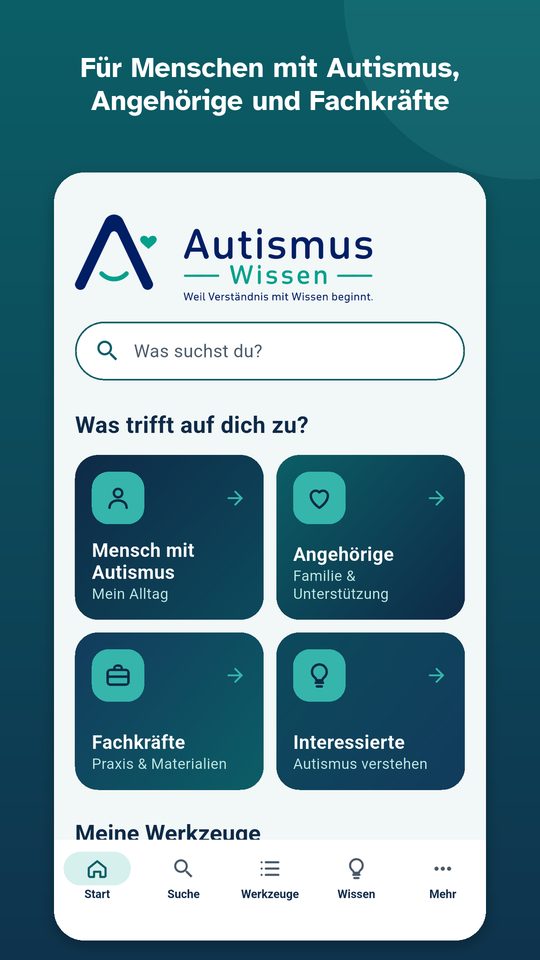
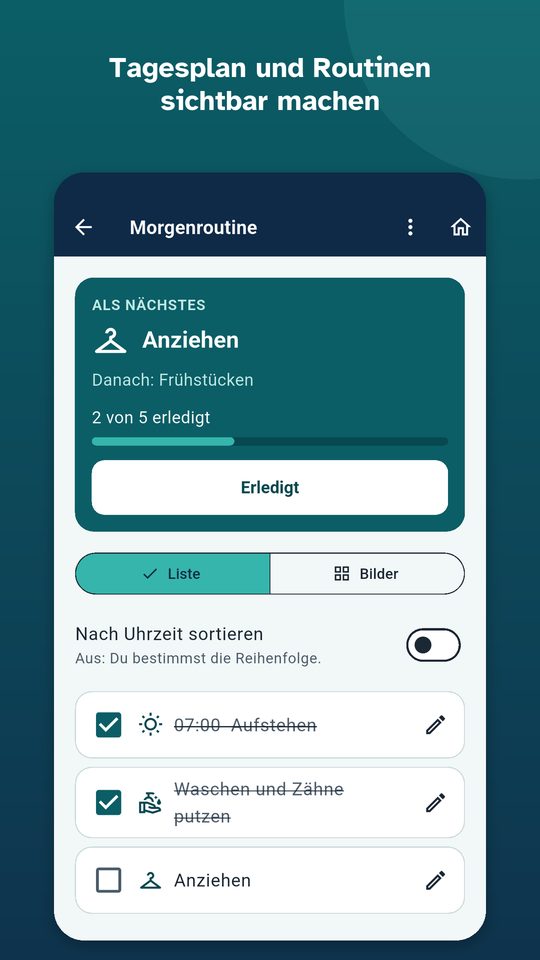
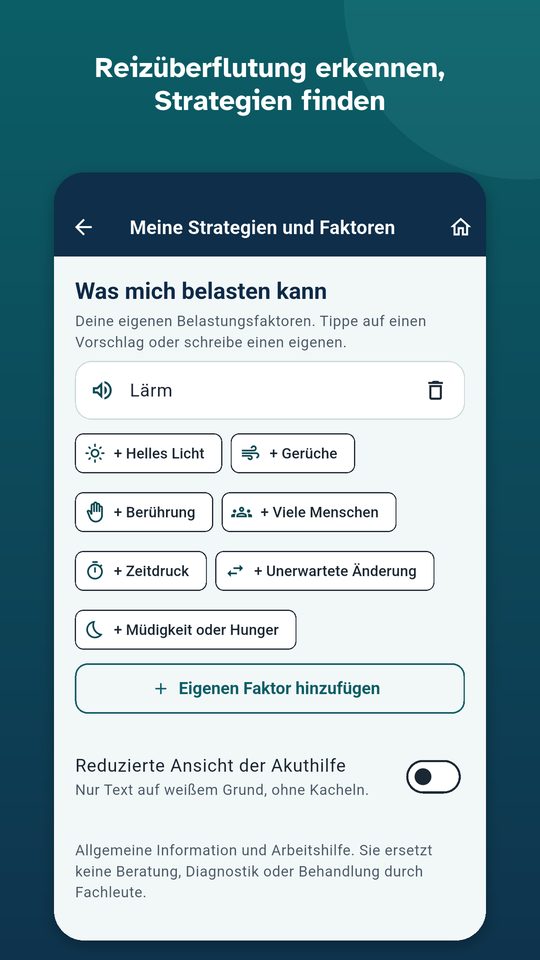
Interactive tools
Discover our free tools for personal orientation and practical support. They explain German law and the German support system.
- Autism Self-AssessmentReflect on your experiencesStart the self-assessment
- Care Level CalculatorEstimate the need for care in GermanyEstimate the care level
- Accommodations AssistantFind suitable accommodations in GermanyStart the assistant
- GdB CalculatorEstimate the degree of disability in GermanyEstimate the GdB
- Objection AssistantPrepare an objection against a German decisionPrepare an objection
What are you looking for?
Choose the starting point that fits your situation.
- I suspect autism in my childHave you noticed something about your child's development? Here is how to find y…
- I suspect autism in myselfDo you wonder whether you are on the autism spectrum? Here you will find orienta…
- My child has received an autism diagnosisThe diagnosis is in. Here you will find guidance on support, applications, relie…
- I received a diagnosis as an adultDid you receive an autism diagnosis as an adult? Orientation on everyday life, w…
- I support people with autism in school or workDo you support a child, an adolescent or an adult on the spectrum? Orientation o…
- I work as a professional with people with autismNotes, basics and sources for professionals in nursery, school, therapy, counsel…
Frequently asked questions
Short answers to questions that often come up at the start.
What is autism?
Autism is a variation in development that lasts a lifetime. It shows mainly in social communication and interaction and in recurring, not very flexible behaviours, interests or activities. How autism shows differs greatly from person to person. In the medical classifications the diagnosis is called “autism spectrum disorder”.
Is autism an illness?
That depends on the point of view. In the medical classifications, autism is listed as “autism spectrum disorder” among the disorders of neural and mental development. The concept of neurodiversity, by contrast, understands autism as a natural diversity of development and rejects seeing deviations from the norm as faults that must be corrected. Both views exist side by side, and neither rules out that people on the autism spectrum need support.
Can autism be cured?
No, autism lasts a lifetime. The German guideline of 2021 described no treatment that cures autism, but help for individual goals, for example social interaction or co-occurring conditions. It also stated that procedures proven to be ineffective should not be used. In the editorial team's view, promises of a cure are a sign of dubious offers.
Do vaccines cause autism?
No: large studies find no link between vaccines and autism. A 2014 meta-analysis evaluated five cohort studies with a total of 1,256,407 children and five case-control studies with 9,920 children and found no link, including for the measles-mumps-rubella vaccine or for thiomersal. A Danish cohort study of 657,461 children found no increased autism risk for children vaccinated with MMR. A paper published in The Lancet in 1998, often cited, was retracted by the journal in 2010.
In detail: Do vaccinations cause autism? What the studies show
At what age can autism be diagnosed?
Autism can be identified in early childhood, but a diagnosis is also possible later, into adulthood. According to the 2016 guideline, a diagnosis made before the age of two remains stable within the spectrum, and where features are clear it should be made even then. For infancy there are no reliably established features with which autism can be predicted.
New & updated
Knowledge articleShaping everyday life
Screen time, gaming and the internet
Knowledge articleShaping everyday life
Dentist visits and dental health
Knowledge articleParents & family
Running away and water danger: safety for children
Knowledge articleParents & family
Mothers and fathers: different strains
How we work
How you can judge our content – and what you can hold us to.
- Traceable sources Every article names its sources so that you can check statements for yourself.
- Date visible The date of the last update to the content is shown; for legal topics, so is the legal position as of that date.
- Evidence and open questions kept apart Where the research is inconsistent, we say so explicitly. “Expert reviewed” only appears where an expert review has actually taken place.